Vision and Direction
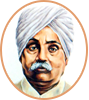
Under the visionary leadership of Hon’ble Vice-Chancellor Prof. (Dr.) Vinod Kumar Verma, the Indian Knowledge System (IKS) Cell at LUVAS envisions itself as a pioneering centre dedicated to exploring, preserving, and promoting India’s rich traditional knowledge across diverse disciplines, with a focused emphasis on Veterinary and Animal Sciences and Dairy Technology. Drawing inspiration from the ideals of Lala Lajpat Rai—an enlightened educationist and nationalist who championed the fusion of modern scientific thought with traditional Indian values—the cell strives to integrate India’s ancient scientific wisdom with contemporary advances for the holistic improvement of animal health, welfare, and productivity as well as the holistic development of faculty. The IKS Cell also aspires to nurture in students a sense of pride, curiosity, and responsibility towards indigenous knowledge, empowering them to become compassionate professionals and innovators dedicated to the sustainable upliftment of society and the veterinary profession.
Objectives of IKS Cell of LUVAS
- To explore, preserve, and promote traditional Indian knowledge across disciplines, including Veterinary and Animal Sciences, and Dairy Technology
- To bridge the gap between time-honoured Indian wisdom and modern scientific research by documenting, validating, and integrating Ethno-Veterinary Practices (EVP) into contemporary animal welfare systems
- To foster innovation in the Veterinary and Dairy sectors by synergistically blending traditional knowledge with modern science and technology
- To organize and conduct training programs, workshops, seminars, and certificate courses for students, faculty, and researchers to deepen understanding and engagement with various aspects of Indian Knowledge Systems (IKS)
- To focus on developing socio-emotional intelligence, ethical conduct, and holistic personal development among students, farmers, and other stakeholders in the animal sector through the integration of Indian Knowledge Systems (IKS)
- To provide a platform for discussion, sharing of ideas, and dissemination of knowledge related to Indian Knowledge Systems (IKS), fostering collaboration and knowledge advancement
Mandate
- In line with NEP 2020, the IKS Cell aims to integrate Indian Knowledge Systems into education and research, fostering multidisciplinary, value-based, and experiential learning in Veterinary and Animal Sciences, and Dairy technology.
- To bridge the gap between time-honoured Indian wisdom and modern scientific research by documenting, validating, and integrating Ethno-Veterinary Practices (EVP) into contemporary animal welfare systems, thereby ensuring that traditional knowledge is not only preserved but also adapted and utilized to promote sustainable, accessible, and effective animal healthcare solutions in India.
- To foster innovation in the Veterinary, Animal Sciences, and Dairy sectors by synergistically blending traditional knowledge with modern science and technology—promoting the development, validation, and adoption of novel approaches and solutions that enhance animal health, productivity, welfare and sustainability, while honoring and leveraging India’s rich legacy of indigenous practices.
- To organize and conduct training programs, workshops, seminars, and certificate courses for students, faculty, and researchers to deepen understanding and engagement with various aspects of Indian Knowledge Systems (IKS), thereby advancing the mandate of the IKS Cell under the Government of India to promote interdisciplinary research, preserve indigenous knowledge, and foster its integration into contemporary education and societal applications.
- To focus on developing socio-emotional intelligence, ethical conduct, and holistic personal development among students, farmers, and other stakeholders in the animal sector through the integration of Indian Knowledge Systems (IKS), thereby fostering essential soft skills that support comprehensive growth, responsible practices, and enhanced well-being across agricultural and animal husbandry domains.
- To provide a platform for discussion, sharing of ideas, and dissemination of knowledge related to Indian Knowledge Systems (IKS), fostering collaboration and knowledge advancement
- Promote and enable further research to address contemporary societal challenges in areas such as holistic health, psychology, neuroscience, nature and environment, sustainable development, resilience, low-cost livestock ration formulation, and climate change mitigation and adaptation strategies.
Contact Details: Lala Lajpat Rai University of Veterinary and Animal Sciences, (LUVAS)-Hisar, Haryana.
Email id: iksc@luvas.edu.in
Members Indian Knowledge System Cell
- Aman Kumar, Principal Scientist, Department of ABT (Co-ordinator)
- Anika Malik, Assistant Professor, Department of VAHEE
- Vijyeta Tiwari, Assistant Professor, Department of VPTX
- Archana Lohiya, Assistant Professor, Department of VPTX
- Preeti, Scientist, Department of VPTX
- Bangar Yogesh Chandrakant, Scientist, Department of AGB
- Poonam Ratwan, Scientist, Department of AGB
- Anil Chitra, Scientist, Department of AGB
- Neha Thakur, Assistant Professor, Department of LPT
- Priyanka, Assistant Professor, Department of sVSR
- Aman Dev Moudgil, Assistant Professor, Department of VPA
- Preeti Lakhani, Assistant Professor, Department of VPB
- Surbhi, Assistant Professor, Department of VPB
- Jyotsana, Assistant Professor, Department of ANN
- Students